Why Stressed Men Prefer Fleshy Women: The Psychology Behind Attraction

When life turns up the heat, our brains switch to survival mode—and attraction follows. Under stress, we’re wired to favor cues of safety, energy, and care, so softer, fleshy bodies can feel instinctively right. Cortisol narrows focus, dopamine reshuffles rewards, and culture whispers that fullness means warmth and stability. It’s not simple aesthetics; it’s adaptive math. But here’s the twist: context changes everything, and what we think is “taste” might be something else entirely.
Evolutionary Logic: Resource Scarcity and Adaptive Mate Preferences

Even before dating apps, our brains ran on survival math: in tough, resource-scarce environments, men’s attraction shifts toward cues of stored energy and resilience. We’re wired to scan for signals that say “we’ll make it.” That’s evolutionary triage: resource prioritization over aesthetics. Softer curves read as caloric buffering—portable reserves that hedge against famine, illness, uncertainty. When conditions get lean, preferences tilt toward bodies that telegraph stability, recovery, and reproductive follow-through. It’s not shallow; it’s ancestral accounting. We weigh who helps us ride out scarcity with fewer trade-offs. So attraction flexes with context, optimizing odds, conserving risk, and maximizing long-term survival returns.
Stress Biology: How Cortisol Shifts Perception and Desire

When cortisol surges, it doesn’t just tense our shoulders—it rewires our filters. Under pressure, our brains flip to survival mode, and stress perception sharpens cues that feel safe, solid, and soothing. That’s cortisol modulation at work: it tweaks attention, boosts reward for comfort signals, and narrows our desires toward what screams stability now.
We feel it fast—visual thresholds shift, appetites change, and our “type” can bend. Faces seem warmer, shapes feel more grounding, softness reads as calm. It’s not fantasy; it’s neurochemistry. As cortisol rises, dopamine pathways recalibrate, and we chase what quiets the alarms. Stress edits taste, desire follows.
Health Heuristics: Interpreting Body Fat as Signals of Fertility and Resilience
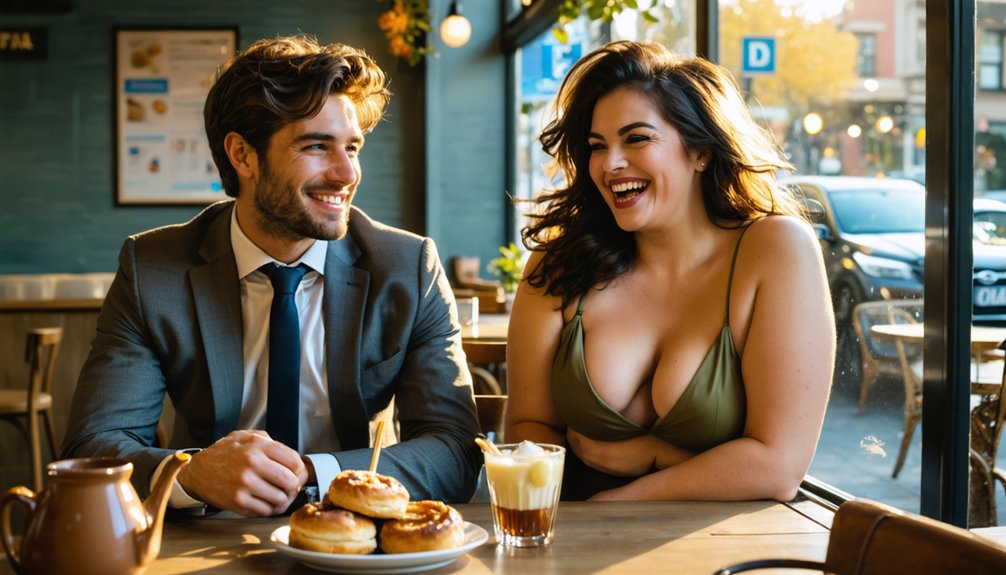
Stress doesn’t just tilt desire; it primes a shortcut our brains love—health heuristics. Under pressure, we scan bodies for survival data: quick, low-effort reads. Body fat becomes a dashboard. We read fertility cues in energy reserves that support cycles, pregnancy, and breastfeeding. We read resilience signals in stored fuel that buffers illness, famine, and stress spikes. Our brains whisper: capable, stable, safe. So attraction shifts: softer contours signal metabolic margin, hormonal steadiness, recovery potential. It’s not math; it’s pattern recognition. We’re predicting tomorrow from shapes today. In chaos, we prefer bodies that broadcast: reserves ready, systems robust, outcomes likely.
Culture and Comfort: Societal Narratives That Link Softness to Care
1) Pillows and plotlines: media pairs softness with rescue, recovery, home.
2) Language codes: “tender,” “cushion,” “full” frame trust.
3) Rituals: hugging, feeding, nesting reinforce balm-over-armor ideals.
Context Matters: Cross-Cultural and Socioeconomic Variations in Attractiveness
Let’s talk where and when beauty hits different—because cultural beauty norms aren’t copy-paste. In some places, curves signal status and warmth; in others, thinness reads as control and chic. Add economic insecurity, and watch preferences shift fast toward bodies that whisper security, health, and plenty.
Cultural Beauty Norms
Although we love to pretend beauty is universal, what counts as “ideal” shifts wildly with culture, history, and wallet size. We absorb cues from media representation, family lore, and local beauty rituals, then call it “taste.” Let’s decode the pattern.
1) Colonial echoes: Western thinness rose with industrial abundance, while fuller figures signaled robustness elsewhere. Global screens export one ideal, but local pride resists.
2) Rituals matter: From hair-braiding circles to k-beauty regimens, shared routines script desirability and belonging.
3) Status signals: Tans, paleness, curves, or angles telegraph class in different places. We don’t just see bodies—we read codes written by culture.
Economic Insecurity Effects
When money feels tight, our brains quietly recalibrate what looks “ideal.” In harsher economies, people tend to prefer cues of sturdiness—fuller bodies, mature faces, dependable partners—signals that whisper survival, not spectacle.
We get it: job insecurity and housing instability flip our attraction algorithms. Scarcity primes us to scan for resilience—energy reserves, reliability, caretaking vibes. We don’t chase fantasy; we choose forecast. When bills loom, “safe and steady” reads hotter than “flashy and fragile.” That’s not shallow; it’s adaptive math. Our preferences swing with the markets, nudged by stress hormones and survival logic. Change the context, change the crush.
Rethinking Bias: Ethical Implications and Respectful Discourse on Body Diversity
Let’s flip the script on weight-based stereotypes and call out the lazy narratives—real attraction isn’t a one-size story. We’ll use language that honors bodies, naming traits without shaming, because words shape worth. And we’ll push for inclusive research practices so the data reflects all of us, not just the usual suspects.
Challenging Weight-Based Stereotypes
Even as headlines hype “ideal” bodies, we can call out the bias and reset the frame: weight isn’t a moral scorecard, and attraction isn’t a one-size script. We challenge Weight stigma by naming it, not normalizing it. We center Body positivity without turning it into a mandate. Let’s interrogate which standards serve us—and ditch the rest. Desire is plural.
1) Track the source: who profits when we fear our shape? Follow the money, unfollow the myth.
2) Expand the data: include diverse bodies in research and visuals.
3) Set boundaries: challenge jokes, “concerns,” and policies that police bodies, including ours.
Language That Honors Bodies
Words shape bodies in the mind, so we choose ours with care and swagger. We ditch shame-coded labels and speak in body positive language that celebrates range, not rank. We say “fat” when it’s self-claimed, never as a weapon. We use inclusive terminology—“plus-size,” “larger-bodied,” “curvy,” “straight-sized”—as context demands, not as cages.
We stop moral math: no “good,” “bad,” “ideal.” We center consent: ask people what words feel right. We swap “before/after” for “then/now.” We praise function and feeling: strength, comfort, pleasure. We call out bias in jokes, headlines, and captions. Words aren’t neutral; they set the vibe—and the standard.
Inclusive Research Practices
Because data shapes desire narratives, we have to design studies that don’t bake in bias. Let’s upgrade our playbook: recruit wide, ask better, share power. We center dignity while tracking how stress skews attraction without shaming bodies.
1) Use diverse sampling: ages, sizes, genders, cultures, neurotypes. Stop overfitting to campus pools and Western norms.
2) Choose participatory methods: co-create surveys, invite feedback loops, compensate lived experts. People aren’t subjects; they’re partners.
3) Audit instruments: purge pathologizing language, report exclusions, preregister analyses.
We’ll publish effect sizes, not clickbait. We’ll separate preference from prejudice. Ethical rigor isn’t extra—it’s the headline.
Conclusion
So when stress hits, our brains pivot to survival math—comfort, safety, stored energy. That’s why fuller bodies can glow brighter: cortisol narrows focus, dopamine rewires reward, and culture whispers that softness equals care. Preferences aren’t random; they’re context-tuned, cross-cultural, and deeply human. Let’s clock the biology, question the narratives, and keep the ethics front and center. Attraction is complex, not a verdict. Respect all bodies, honor nuance, and remember: what we want can shift—and that’s okay.