10 Best Hinge Alternatives for Finding Real Relationships in 2026

If you’ve been using Hinge for a while, you might be feeling the frustration. Maybe you’re seeing the same profiles on repeat, finding that most meaningful features are locked behind a paywall, or matching with people who never actually respond. You’re not alone—I hear these complaints constantly from my dating coaching clients.
As someone who’s spent years helping singles navigate the modern dating landscape, I’ve tested dozens of dating apps to understand what actually works. The good news? There are excellent Hinge alternatives that offer similar relationship-focused features, and some might even be a better fit for your specific dating goals.
In this guide, I’ll walk you through the 10 best apps like Hinge for serious daters in 2026. Each has been carefully evaluated based on matching quality, user experience, success rates, and value for money. Whether you’re looking for something with a larger user base, better free features, or a more unique approach to matchmaking, you’ll find an option that works for you.
What Makes a Good Hinge Alternative?
Before we dive into specific apps, let’s talk about what you should actually be looking for in a dating platform if Hinge hasn’t been delivering results.
The best Hinge alternatives share several key characteristics. First and foremost, they prioritize meaningful connections over casual hookups. This means the app’s design, matching algorithm, and user base all lean toward people seeking serious relationships rather than quick flings.
Quality matching algorithms matter tremendously. You want a platform that goes beyond superficial swiping and actually considers compatibility factors like values, lifestyle, and long-term goals. The most effective dating apps use detailed profiles, questionnaires, or behavioral data to suggest genuinely compatible matches.
An active and engaged user base is equally important. It doesn’t matter how good an app’s features are if everyone on it is inactive or unresponsive. Look for platforms with daily active users who are actually showing up and putting in effort to connect.
Finally, reasonable pricing makes a difference. While some premium features are worth paying for, the core functionality should allow you to make genuine connections without breaking the bank. The best relationship apps strike a balance between offering value in their free version while providing meaningful upgrades for those who want them.
10 Best Apps Like Hinge for Serious Daters
1. Bumble – Best for Women Who Want Control
Bumble revolutionized online dating by flipping the script on who makes the first move. In heterosexual matches, women have 24 hours to initiate conversation, which creates a more respectful dynamic and reduces unwanted messages. This approach has made it one of the most popular Hinge alternatives, especially among professional women in their late twenties and thirties.
Best for: Professional women who value empowerment, and men who appreciate confident partners
Pricing: Free with optional Bumble Premium ($27.99/month) or Bumble Boost ($16.99/month)
Pros: The app offers three distinct modes—Date for romantic connections, BFF for friendships, and Bizz for professional networking. This versatility means you’re building multiple types of meaningful relationships. Bumble also has strong safety features including photo verification and a block feature. With over 42 million users globally, you’ll find plenty of active members.
Cons: The 24-hour messaging window can feel stressful, and some users report that conversations fizzle quickly if both people don’t respond promptly. Men who prefer to make the first move might find the format limiting.
My take: In my coaching practice, I’ve seen Bumble work exceptionally well for women who are tired of being bombarded with low-effort messages. The quality of matches tends to be higher because both parties have to be genuinely interested to keep the connection alive. Just be prepared to be proactive if you’re a woman—the timer moves fast!
2. Coffee Meets Bagel – Best for Quality Over Quantity
If you’re exhausted by endless swiping, Coffee Meets Bagel offers a refreshing alternative. Every day at noon, you receive a curated selection of potential matches (called “bagels”) based on your preferences and behavior. This limited approach forces you to actually consider each person rather than making snap judgments.

Best for: Busy professionals, thoughtful daters who prefer depth over breadth, people in major metropolitan areas
Pricing: Free with optional Premium subscription ($35/month)
Pros: The curated daily matches mean you’re not overwhelmed with choices, making it easier to focus on quality connections. The app’s algorithm learns from your choices over time, improving match quality. Profile prompts encourage showing personality beyond just photos. The platform skews toward educated professionals seeking serious relationships.
Cons: The limited daily matches can feel restrictive if you’re eager to meet people quickly. Smaller user base compared to giants like Tinder or Bumble, especially outside major cities. Premium features are somewhat expensive for what you get.
My perspective: I love recommending Coffee Meets Bagel to clients who feel overwhelmed by dating apps. The forced slowdown actually increases the likelihood of meaningful conversations because you’re treating each potential match as a real person rather than another swipe. Give yourself at least three weeks to let the algorithm learn your preferences.
3. Match.com – Best for Marriage-Minded Singles
Match.com has been facilitating relationships since 1995, making it the grandfather of online dating. That longevity isn’t just impressive—it’s proven. Match boasts more first dates, relationships, and marriages than any competitor, with thousands of success stories to back up those claims.
Best for: Singles over 30, people explicitly seeking marriage, those who value a more traditional dating approach
Pricing: Free to browse, subscriptions start at $20.99/month (12-month plan)
Pros: Massive user base of over 30 million members means excellent selection across all age groups and demographics. Extremely detailed search filters let you specify exactly what you’re looking for. The platform’s reputation attracts serious daters rather than casual users. Match also offers in-person singles events in many cities.
Cons: Most useful features require a paid subscription. The interface feels less modern than newer apps. The detailed profiles can feel overwhelming to create initially.
My assessment: Match works best for people who know what they want and are ready to invest in finding it—both financially and emotionally. I’ve had multiple clients find their spouse on Match, particularly those in their thirties and forties who are past the casual dating phase. The key is taking time to build a thorough profile and being specific about your must-haves.
4. OkCupid – Best for Personality-Based Matching
OkCupid stands out for its extensive questionnaire system that dives deep into your personality, values, and preferences. The app uses your answers to calculate compatibility percentages with potential matches, giving you data-driven insights into who might actually work long-term.
Best for: People who value intellectual compatibility, those who enjoy answering questions about themselves, daters seeking progressive and inclusive spaces
Pricing: Free with optional Premium upgrades ($19.95/month)
Pros: The matching algorithm goes far beyond surface-level characteristics to assess genuine compatibility. You can see why someone’s a good match based on shared answers. The platform is LGBTQ+ friendly and offers extensive gender and orientation options. Free users can send unlimited messages.
Cons: The sheer volume of questions can feel overwhelming. Free version includes ads and limited ability to see who’s liked you. Some users report the match quality varies significantly.
My experience: OkCupid works beautifully for analytical types who want to understand why they’re compatible with someone beyond physical attraction. I’ve seen it particularly successful for people with specific values or lifestyle preferences they’re unwilling to compromise on. My advice: answer at least 200 questions to get accurate matches, and prioritize questions marked as “very important.”
5. eHarmony – Best Algorithm for Long-Term Success
eHarmony built its reputation on a scientifically-designed compatibility matching system developed by psychologists. The platform exclusively focuses on serious relationships, and its lengthy onboarding process serves as a natural filter for casual daters.
Best for: Singles aged 30-55, marriage seekers, people who want expert guidance in their search
Pricing: Premium-only (starting at $35.90/month for 12-month plan)
Pros: The comprehensive personality assessment leads to highly compatible matches. Over 80% of members have college degrees, indicating a professional user base. The guided communication features help introverts start conversations. eHarmony claims responsibility for 4% of U.S. marriages.
Cons: Expensive compared to other options with no free messaging. The lengthy questionnaire takes 30-45 minutes to complete. You can’t browse profiles freely—you’re limited to matches the algorithm provides.
Expert insight: eHarmony is the app I recommend to clients who are absolutely serious about finding a life partner and willing to invest accordingly. The high price point actually works as a filter—people paying $35+ monthly are genuinely motivated. The matches tend to be fewer but significantly higher quality than swipe-based apps. If you’re over 35 and want marriage, this is worth trying.
6. Boo – Best for Personality Type Matching
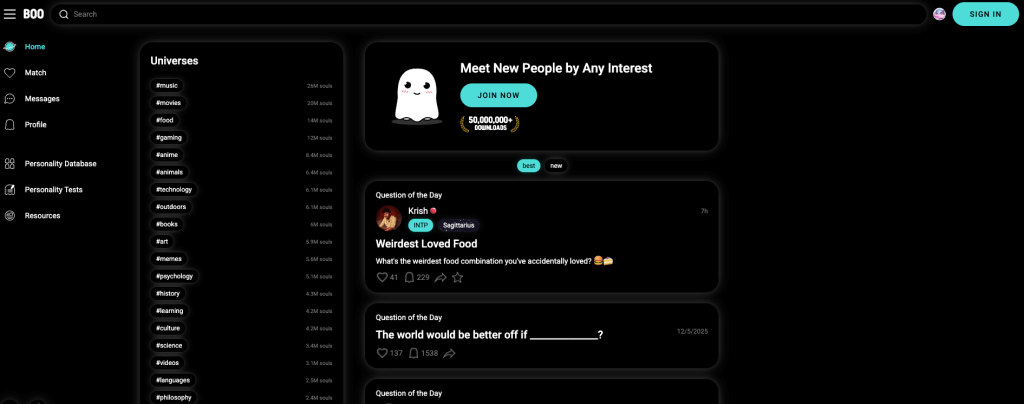
Boo takes a psychology-first approach by matching users based on the 16 personality types framework. Beyond romantic connections, it also facilitates friendships and community building around shared interests and personality traits.
Best for: People who value deep compatibility, those interested in personality psychology, Gen Z and younger Millennials
Pricing: Free with optional premium features
Pros: Personality-based matching goes beyond surface-level compatibility to predict relationship success. The app includes social features like discussion boards around interests. You can specify exactly which personality types you’re most compatible with. The community aspect reduces the pressure of pure romantic pursuit.
Cons: Smaller user base than mainstream apps. The personality framework might feel limiting if you don’t identify with type-based psychology. Still building out features compared to more established platforms.
My perspective: I’ve become increasingly impressed with Boo’s approach. Understanding your personality type and compatibility patterns can genuinely improve relationship outcomes. I recommend it for self-aware daters who’ve done personal development work and understand their attachment style and communication needs. It’s particularly powerful when combined with one mainstream app.
7. The League – Best for Ambitious Professionals
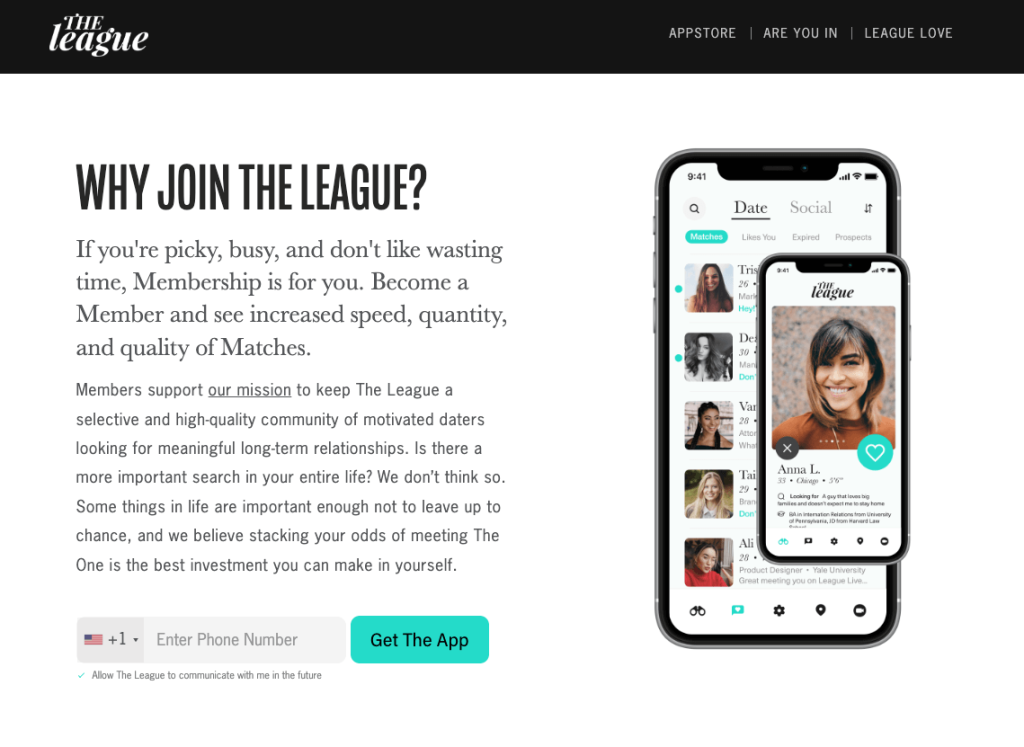
The League positions itself as the dating app for successful, ambitious singles. The platform has a selective admission process based on education, career, and LinkedIn profile, creating an exclusive community of high-achieving professionals.
Best for: Career-focused individuals, ambitious daters in competitive fields, people seeking partners with similar professional status
Pricing: Free limited version, Member starting at $99/month
Pros: Highly curated matches of educated professionals. Strict verification reduces fake profiles. The app respects your privacy with features to hide from LinkedIn connections. Daily curated matches save time.
Cons: Extremely expensive premium tiers. The exclusivity can feel elitist. Waiting list for new members can take weeks. Limited free version barely functional.
Honest assessment: The League works for a very specific demographic—typically professionals earning six figures who prioritize career achievement in partners. I’ve had clients find great matches here, but only those comfortable with its unapologetic selectivity. If status and achievement matter in your partner selection, it’s worth the price. If those aren’t top priorities, skip it.
8. Plenty of Fish – Best Free Hinge Alternative
Plenty of Fish (POF) offers completely free messaging and has one of the largest user bases in online dating at over 150 million registered users. If budget is your primary concern, POF provides extensive free features that other apps lock behind paywalls.
Best for: Budget-conscious daters, people in smaller cities, those wanting maximum options
Pricing: Free with optional upgrades ($12.99/month)
Pros: Totally free to message anyone. Enormous user base means someone is probably nearby. Advanced search filters help narrow down options. The chemistry predictor quiz adds personality matching to basic search.
Cons: The free model means lower barriers to entry, resulting in more inactive profiles and lower overall match quality. Interface feels dated. Higher proportion of users seeking casual connections despite the app’s relationship marketing.
Real talk: POF can work, but you need patience and strong filters. I typically recommend it as a supplementary app rather than your primary platform. The sheer numbers mean you’ll find serious people, but you’ll wade through more mismatches first. Set clear boundaries in your profile about what you’re seeking.
9. Thursday – Best for Spontaneous Daters
Thursday completely reimagines the dating app model by only being active on Thursdays. This creates urgency and encourages users to actually meet up rather than endlessly chatting. The app also organizes in-person events for members.

Best for: People tired of endless texting, spontaneous personalities, those in major cities with active dating scenes
Pricing: Free with optional paid features
Pros: The once-weekly structure prevents dating app burnout. Built-in urgency encourages real dates. In-person events provide safer first meeting options. The app deletes matches each week, reducing the paralysis of too many options.
Cons: Limited to one day weekly might not fit your schedule. Smaller user base, mainly in major UK cities and expanding to U.S. High-pressure environment isn’t for everyone.
My take: Thursday works brilliantly for action-oriented people who hate the endless messaging phase. I’ve seen clients have more actual dates from Thursday than apps they use daily. The key is being available on Thursdays and willing to commit to meeting quickly. Not for the cautious or those who need extensive vetting time.
10. Feels – Best for Video-First Connections
Feels embraces short-form video content similar to TikTok, allowing users to showcase personality through clips rather than static photos. This video-first approach helps you get a genuine sense of someone’s energy and mannerisms before matching.
Best for: Gen Z daters, visual communicators, people who feel limited by photos and text
Pricing: Free with premium upgrades available
Pros: Video profiles provide more authentic representation than photos. You can hear someone’s voice and see their personality. The format reduces catfishing since videos are harder to fake. Younger, tech-savvy user base.
Cons: Smaller, newer platform still building user base. Creating video profiles can feel vulnerable. Not ideal for camera-shy individuals. Limited geographic availability.
Expert opinion: Feels represents the future of dating apps—more authentic, less curated, and harder to fake. I recommend it for younger clients comfortable with video content and those who’ve struggled with photos not capturing their personality. The vulnerability required actually filters for genuine people. Just know you’re early adopting a platform that’s still finding its footing.
Hinge vs. Top Alternatives: Quick Comparison
To help you make a faster decision, here’s how the top Hinge alternatives stack up:
| App | Best For | Price Range | Key Feature | User Base |
|---|---|---|---|---|
| Bumble | Empowered women | Free – $28/mo | Women message first | 42M+ |
| Coffee Meets Bagel | Busy professionals | Free – $35/mo | Daily curated matches | 10M+ |
| Match.com | Marriage-seekers 30+ | $21 – $45/mo | Proven track record | 30M+ |
| OkCupid | Personality matching | Free – $20/mo | Compatibility scores | 50M+ |
| eHarmony | Serious long-term | $36 – $66/mo | Scientific algorithm | 10M+ |
| Boo | Personality types | Free + premium | 16 personalities | Growing |
How to Choose the Right Dating App for You
With so many options, how do you actually decide? Here’s my framework for choosing between these Hinge alternatives:
Consider your age and demographic. Different apps attract different age groups. If you’re under 30, Bumble, Boo, and Feels will have more active users in your range. Over 40? Match and eHarmony have stronger representation in your demographic.
Define your goal clearly. Are you casually dating to see what’s out there, actively seeking a serious relationship, or specifically looking for marriage? Coffee Meets Bagel and eHarmony work best for serious seekers. Bumble offers more flexibility for various intentions.
Evaluate your budget honestly. Free apps like OkCupid and POF can work, but paid platforms often deliver better results because they attract more committed users. Consider the cost as an investment in your relationship future.
Assess your time commitment. Swipe-heavy apps like Bumble require more daily attention. Curated match apps like Coffee Meets Bagel and eHarmony need less time but more thoughtful engagement.
Identify your core values. If personality compatibility matters most, try OkCupid or Boo. If you prioritize career ambition in a partner, The League fits. If you value women’s empowerment, Bumble aligns with those values.
In my experience coaching clients, I recommend trying 2-3 apps simultaneously for the first month. This gives you enough data to see where you’re getting quality matches without spreading yourself too thin. Give each platform at least three weeks before deciding it’s not working—algorithms need time to learn your preferences.
Common Mistakes When Trying New Dating Apps
Let me save you from the mistakes I see constantly:
Using the same photos across all platforms. Each app has a different culture. What works on Bumble might not work on The League. Tailor your photo selection to match the app’s vibe.
Copying your profile without customization. Hinge’s prompts differ from OkCupid’s questions differ from Match’s free-form bio. Take time to optimize for each platform’s format.
Not understanding each app’s culture. Spend time browsing before creating your profile. Notice how people present themselves, what prompts get used, what style of photos appear. Match that energy.
Giving up too quickly. Dating apps have learning curves. Give yourself at least 2-3 weeks on a new platform before declaring it doesn’t work. The algorithm needs time to understand your preferences.
Paying for premium before testing the free version. Always exhaust the free features first. If you’re getting good matches and just hitting messaging limits, then upgrade. Don’t pay hoping it will magically improve a platform that isn’t working.
FAQs About Hinge Alternatives
Is Bumble or Hinge better for relationships?
Both apps are relationship-focused, but they serve slightly different preferences. Bumble works better if you want more control over conversations and prefer a larger, more diverse user base. Hinge excels if you value detailed profiles and don’t mind a smaller pool of more curated matches. In my coaching experience, Bumble tends to work better for women in their late twenties to mid-thirties who are decisive and action-oriented, while Hinge resonates with thoughtful, slightly introverted daters who want depth from the start.
What dating app has the highest success rate?
eHarmony claims the highest marriage rate, reporting that 4% of U.S. marriages started on their platform. Match.com has facilitated more total marriages than any competitor due to its longevity and size. However, “success” depends on your definition—if success means actually meeting quality people for dates, Bumble and Coffee Meets Bagel rate highly. If success means finding a life partner, eHarmony and Match lead. The highest success rate is ultimately the app where you meet the right person for you.
Are free dating apps worth it?
Free dating apps can absolutely work—OkCupid and Bumble offer solid free experiences. However, paid platforms often deliver better results because financial investment tends to indicate serious intent. The sweet spot is often freemium apps like Bumble or OkCupid where you start free and upgrade only if you’re getting good matches but hitting feature limits. Exclusively free apps like POF work but require more patience filtering through inactive or non-serious users.
Can you use multiple dating apps at once?
Yes, and I actually recommend it strategically. Use 2-3 apps simultaneously for the first month to see where you get the best matches. This prevents putting all your eggs in one basket while not spreading yourself so thin that you can’t engage meaningfully. One relationship-focused app (like Hinge or Coffee Meets Bagel) plus one larger-pool app (like Bumble or Match) makes a strong combination. Just manage your time carefully to avoid burnout.
Find Your Perfect Match Beyond Hinge
The beauty of today’s dating landscape is that you have options. If Hinge isn’t delivering the results you want, there are multiple quality alternatives that might be a better fit for your personality, goals, and dating style.
Remember, no single app is universally “best”—the right platform is the one where you meet compatible people who align with your relationship goals. Match.com might feel outdated but lead you to your spouse. The League might seem elitist but introduce you to someone who shares your ambition. Feels might feel silly until you meet someone whose video made you genuinely laugh.
My advice? Choose two apps from this list that resonate with your priorities. Commit to giving them three solid weeks with optimized profiles and genuine effort. Show up consistently, engage thoughtfully, and stay open to who appears.
You deserve meaningful connections with people who excite you and align with your values. The right person is out there looking for someone exactly like you—sometimes you just need the right platform to bring you together.